
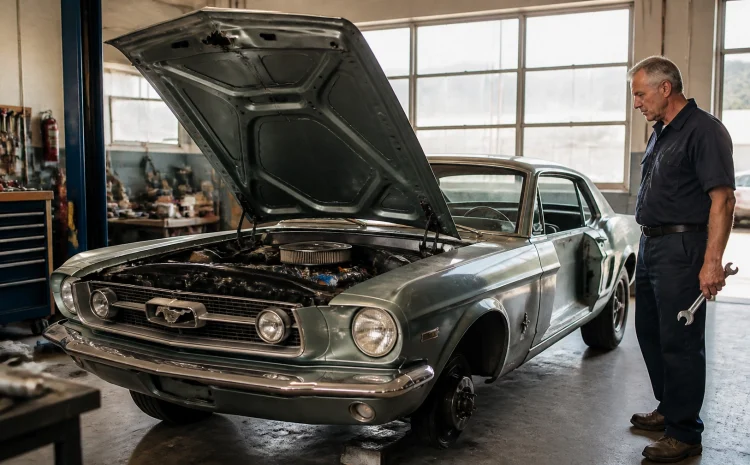
5 Myths About Classic Car Restoration Debunked
Walking into a garage and seeing the silhouette of a vintage 1969 Camaro or a 1953 Chevy pickup under a layer of dust is enough to make any gearhead’s heart skip a beat. There is a specific scent that comes with those old machines: a mix of aged gasoline, weathered vinyl, and oil that’s been sitting since the disco era. For many of us in Huntington, finding a “diamond in the rough” feels like the start of a legendary adventure.
You imagine the first time you’ll turn the key and hear that V8 roar to life, the sun reflecting off a mirror-finish paint job as you cruise down the local highway. But before you dive headfirst into your first (or fifth) project, it is important to separate the romanticized version of car building from the reality of the garage floor.
At The Otto Shop, we’ve spent over 20 years bringing these legends back to life. Being a family-owned business, we treat every restoration as if it’s our own heirloom. Over the decades, we’ve heard it all. From “It’ll only take a month” to “I can do the metalwork with a YouTube video,” certain myths persist that can lead to heartbreak and empty wallets.
Let’s pull back the curtain and debunk the five biggest myths about classic car restoration so you can approach your project with eyes wide open.
Myth 1: The “TV Show” Timeline
Have you ever spent a Saturday morning watching a restoration show where a rusted-out shell turns into a showroom-quality masterpiece in a single 42-minute episode? It’s captivating television, but it’s one of the most damaging myths in the automotive world.
In reality, a high-quality restoration doesn’t happen over a weekend. When you search for classic car restoration near me, you aren’t just looking for a quick fix; you are looking for craftsmanship. A full “frame-off” restoration can easily take hundreds, if not thousands, of hours.
Why does it take so long? Imagine every bolt you touch being seized by 40 years of rust. Imagine discovering that the “minor” dent on the quarter panel is actually hiding a history of poor repairs and structural rot. At our Huntington auto repair shop, we know that patience is the most important tool in the box. Rushing a restoration leads to cut corners, and in the world of vintage vehicles, those corners always come back to haunt you.
Myth 2: Restoration is Always a Guaranteed Profit
One of the most common questions we get is, “If I spend $40,000 restoring this, will it be worth $80,000 when I’m done?”
The short answer? Not necessarily.
Restoration should be viewed primarily as a labor of love, not a quick flip for profit. While high-end, rare, or numbers-matching vehicles can certainly appreciate in value, the cost of professional labor, rare parts, and custom auto fabrication often meets or exceeds the market value of the finished car.
If your goal is to have a reliable, beautiful piece of history that you can pass down to your children, the investment is priceless. However, if you are looking at it purely as an investment, you have to be very strategic about the initial purchase price and the rarity of the model. We always tell our customers in the Huntington, WV area: build the car because you love it, not just because you want to sell it.
Myth 3: DIY is Always the Cheapest Route
We love a good DIY project. There is a deep sense of pride in turning your own wrenches. However, there is a point where the “do-it-yourself” approach actually becomes more expensive than hiring a professional from the start.
Classic cars are not like modern vehicles. They require specialized knowledge that isn’t always found in a manual. For instance, when it comes to structural integrity or complex engine rebuilds, an amateur mistake can lead to safety risks or the need to pay a professional twice as much to fix the “fix.”
Looking for a certified mechanic near me isn’t about admitting defeat; it’s about ensuring the job is done right the first time. At The Otto Shop, we often see projects that were started at home but stalled out when the owner hit a wall with electrical gremlins or advanced metalwork. By partnering with an experienced auto repair shop, you gain access to decades of specialized tools and tribal knowledge that simply can’t be bought at a local hardware store.

Myth 4: “It Runs, So the Engine is Fine”
“I heard it run before I bought it!” is a phrase we hear often. While a running engine is a great sign, it’s far from a guarantee of health.
An engine that has been sitting for years might start, but that doesn’t mean the seals aren’t brittle, the bearings aren’t worn, or the cooling passages aren’t clogged with decades of scale. Running a vintage engine without a thorough inspection is a recipe for a catastrophic failure.
When we perform mechanical restorations, our certified mechanics go deep. We check compression, test for leaks, and inspect the internals for signs of fatigue. A truly restored classic doesn’t just look like a 1965 Mustang; it should drive with the reliability of a modern machine. We treat every vehicle like it’s our own, which means we won’t tell you the engine is “good enough” unless we’d trust it for a cross-country trip ourselves.
Myth 5: Custom Fabrication is Only for “Show Cars”
Many people think that custom auto fabrication is only for wild hot rods with flames and oversized blowers. In reality, fabrication is a staple of almost every classic restoration.
As vehicles age, original parts become harder to find. Sometimes, the part you need hasn’t been manufactured since the mid-70s. This is where the skill of a fabricator becomes essential. Whether it’s creating a patch panel for a rusted floorboard or modifying a bracket to fit a modern air conditioning compressor into a vintage dash, custom work is what keeps these cars on the road.
In Huntington, drivers know that our 20+ years of hands-on experience means we don’t just “bolt things on.” We have the skills to create the solutions that the parts catalogs don’t offer. This level of craftsmanship is what separates a “car that was fixed” from a “car that was restored.”
Planning Your Restoration Journey
Restoring a vehicle is a marathon, not a sprint. It is a journey through history, engineering, and personal style. By understanding these myths, you can set realistic expectations and ensure that your project remains a source of joy rather than a source of stress.
Are you looking for transparency and quality craftsmanship for your project? At The Otto Shop, we pride ourselves on being the local experts you can trust. From minor mechanical fixes to full-scale restorations, our family-owned team is here to help drivers in the Huntington, WV area get their pride and joy back on the road.
How to Start Your Project Today
If you have a vintage vehicle sitting in the garage and you aren’t sure where to start, here is our advice:
- Define Your Goal: Do you want a daily driver or a trophy winner?
- Set a Realistic Budget: Always include a “contingency fund” for the surprises that will happen.
- Inspect the Foundation: Focus on the frame and rust before the paint and interior.
- Partner with the Pros: Don’t be afraid to ask for help on the technical stages of the build.
Whether you need an auto repair shop for routine maintenance or a specialized team for custom auto fabrication, we are ready to help. We work on all makes and models, treating every vehicle with the respect it deserves.
Ready to start your restoration story? Contact us at The Otto Shop today for a transparent estimate and let’s get that classic back where it belongs: on the road.
5 Myths About Classic Car Restoration Debunked | The Otto Shop
Thinking of restoring a vintage ride? We debunk 5 common myths about classic car restoration near me to help you start your project the right way.