
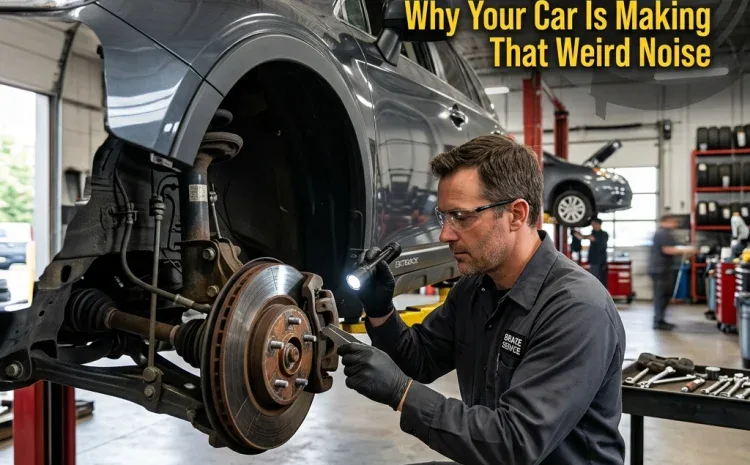
Brake Service and Repair Matters: Why Your Car Is Making That Weird Noise
Brake Service & Repair: Identifying Weird Car Noises | The Otto Shop
Is your car making a weird noise? Learn why brake service and repair matters and what those squeaks and grinds mean for your safety in Huntington, WV.
Imagine this: You’re driving down a quiet street in Huntington, enjoying your favorite playlist and looking forward to a relaxing evening. You approach a stop sign, lightly press the brake pedal, and suddenly, SCREECH! A high-pitched wail pierces the air, turning heads on the sidewalk and sending a shiver down your spine. Your heart sinks. Is your car falling apart? Is it safe to keep driving? That "weird noise" is more than just an annoyance; it’s your vehicle’s way of tapping you on the shoulder and saying, "Hey, we need to talk."
At The Otto Shop, we hear these stories every day. We know that mysterious car noises can be stressful and, frankly, a little embarrassing. But understanding those sounds is the first step toward regaining your peace of mind and ensuring your safety on the road.
Why Does My Car Sound Like a Haunted House?
Have you ever wondered why brakes, of all things, are so vocal when they’re unhappy? Your braking system is a marvel of physics, relying on friction to turn the kinetic energy of your moving vehicle into heat. When everything is working correctly, this process is relatively quiet. However, when components wear down or get out of alignment, that harmony turns into a cacophony.
Ignoring these sounds is a bit like ignoring a smoke detector with a low battery. It might be quiet for a moment, but the underlying issue isn't going away. Proper brake service and repair are the most critical maintenance tasks you can perform to keep yourself, your family, and your neighbors safe.

The Symphony of Brake Noises: What Do They Mean?
Not all brake noises are created equal. Depending on the pitch, volume, and timing, your car is sending a specific SOS signal. Let’s break down the most common offenders we see here at the shop.
1. The High-Pitched Squeal: The "Early Warning" Signal
Does your car emit a piercing squeak every time you slow down? This is often the most common sound drivers report. In many cases, this is actually a safety feature by design.
Most modern brake pads are equipped with a small metal tab called a wear indicator. When the friction material on the pad wears down to a certain level, this metal tab makes contact with the brake rotor, creating that unmistakable high-pitched squeal. It’s a deliberate "heads up" that your pads are getting thin and need replacement soon.
However, if the squealing only happens first thing in the morning, it might just be a bit of surface rust or moisture on the rotors from the West Virginia humidity. If it persists after a few stops, it’s time to visit our services page for a check-up.
2. The Dreaded Metallic Grinding: The "Stop Right Now" Signal
If your car sounds like two giant pieces of iron are being rubbed together, you’ve moved past the warning phase and into the danger zone. Metallic grinding usually means your brake pads have worn down completely.
Imagine this: The soft friction material is gone, and now the metal backing plate of the pad is pressing directly against the cast-iron rotor. This is "metal-on-metal" contact. Not only does this drastically reduce your ability to stop quickly, but it also causes severe damage to the rotors. If you hear this, stop driving as soon as it is safe to do so and call for a professional inspection.
3. The Rhythmic Thumping or Pulsating: The "Warped" Signal
Do you feel a wobble in the steering wheel or a rhythmic "thump-thump-thump" when you apply the brakes? This usually points to warped rotors.
Rotors need to be perfectly flat to provide a smooth surface for the pads to grip. Over time, extreme heat from heavy braking or stop-and-go traffic can cause the metal to warp or develop "hot spots." When the pads press against an uneven surface, they bounce, creating that vibration and thumping sound. This doesn't just feel weird; it can increase your stopping distance and put extra strain on your suspension.
4. The Clicking or Rattling: The "Loose Hardware" Signal
If you hear a clicking sound whenever you hit a bump or apply the brakes, it might be a sign that a caliper bolt, clip, or spring has become loose or damaged. Brake components are held in place by specialized hardware designed to keep everything snug. If a clip snaps or a bolt loosens, the pads can shift around inside the caliper, leading to that annoying rattle.

Why Timely Brake Service and Repair is Non-Negotiable
It’s tempting to turn up the radio and hope the noise goes away, but delaying brake repair is a gamble where the stakes are incredibly high. Here is why acting fast matters:
- Safety First: This is the big one. Your brakes are your primary safety system. A delay of even a fraction of a second in stopping time can be the difference between a close call and a serious accident. If you've recently had an unfortunate encounter with local wildlife, you might already be looking into deer hit damage repair, but let's make sure your brakes are sharp enough to prevent the next one.
- Preventing "Collateral Damage": When you ignore worn pads, you eventually ruin the rotors. If you ignore warped rotors, you can cause premature wear on your tires and suspension components. A simple pad replacement is affordable; replacing an entire braking system is not.
- Reliability for Your Business: If you manage a group of vehicles, brake health is even more vital. We often discuss how small checks are the simple trick to improve your fleet maintenance services, and keeping those brakes quiet is a huge part of that.
A Peek Behind the Wheel: What Happens During a Brake Service?
When you bring your vehicle to The Otto Shop, we don't just throw on new parts and call it a day. We perform a comprehensive "walk-through" of your entire braking system to ensure everything is functioning as the manufacturer intended.
- Detailed Inspection: We pull the wheels and check the thickness of the pads, the condition of the rotors, and the integrity of the brake lines.
- Fluid Check: Brake fluid is hygroscopic, meaning it absorbs moisture over time. This can lead to corrosion inside your master cylinder and calipers. We check for fluid clarity and levels.
- Hardware Lubrication: We clean and lubricate the caliper slide pins. This ensures the pads move freely and wear evenly, preventing that annoying "squeak" caused by sticking parts.
- Rotor Resurfacing or Replacement: Depending on the thickness left, we may be able to "turn" (resurface) your rotors to make them perfectly flat again, or we’ll recommend high-quality replacements if they are too thin or damaged.

Preventative Measures: Keeping Your Brakes Quiet
While parts will eventually wear out, you can extend the life of your brakes with a few simple habits:
- Coast to a Stop: Instead of waiting until the last second to slam on the brakes, let off the gas early and allow the engine to help slow you down.
- Lighten the Load: Extra weight means more work for your brakes. Don't use your trunk as a permanent storage unit for heavy items.
- Flush the Fluid: Most manufacturers recommend a brake fluid flush every two years. This keeps the internal components of your system rust-free and responsive.
- Avoid "Two-Footing": If you drive an automatic, avoid resting your left foot on the brake pedal. Even slight pressure can cause "brake drag," leading to overheating and premature wear.
Seasonal Tips for Huntington Drivers
Living in our neck of the woods means dealing with various weather extremes. In the winter, road salt can be incredibly corrosive to brake hardware. In the humid summers, flash rust can build up overnight. We recommend a quick brake inspection every time you get your tires rotated. It’s an easy way to catch small issues before they become "weird noises."

The Decision-Making Framework: Should You Repair or Replace?
We understand that car repairs can be an unexpected hit to the budget. When we talk to our neighbors about their brakes, we use a simple framework to help them decide:
- The "Maintenance" Level: If you have 20-30% pad life left and no noise, we’ll let you know so you can plan for a service in the coming months.
- The "Safety" Level: If your wear indicators are screaming or your pads are below 15%, we recommend immediate replacement to ensure you can stop safely in an emergency.
- The "System Restoration" Level: If you have grinding or extreme pulsation, we recommend a full service including pads, rotors, and hardware to restore your car to its original factory performance.
Trust Your Ears and Trust The Otto Shop
Your car is a complex machine, but it’s remarkably good at telling you when it needs help. If you're hearing a squeak, a grind, or a thump, don't wait for the sound to get worse. At The Otto Shop, we pride ourselves on being a trustworthy partner for all your auto repair and collision services.
We treat every car like it’s our own, ensuring that when you drive away, the only thing you hear is the sound of the road. Ready to silence those "weird noises"? Contact us today to schedule an inspection. Let’s keep you stopping safely and smoothly!