
Classic Car Restoration Tips: What You Need to Know Before You Start
Imagine this: You’re walking through a dusty barn or scrolling through an old marketplace listing when you see it: the glint of chrome beneath a layer of decades-old grime. You can almost smell the scent of aged leather and gasoline, and you can hear the deep, rhythmic rumble of a V8 engine coming back to life. For many of us in Huntington, finding a project car isn't just about buying a vehicle; it’s about rescuing a piece of history.
But as any seasoned gearhead will tell you, the gap between "finding a classic" and "driving a classic" is paved with hard work, unexpected costs, and a lot of grease. At The Otto Shop, we’ve spent over 20 years helping folks navigate this journey. We’ve seen the triumphs of a perfectly polished fender and the frustrations of a rusted-out floor pan. If you're searching for "classic car restoration near me" or looking to start your own project, there are a few things you absolutely need to know before you pick up a wrench.
Is Your Dream Car a Diamond or a Disaster?
Before you commit your garage space and your savings, you have to perform a cold, hard assessment. It’s easy to fall in love with a silhouette, but the beauty of a classic car is often skin-deep, and what lies beneath can be scary.
Have you checked the bones? The most important thing to look for isn't the paint or the engine: it's the structural integrity. Rust is the primary project killer. While surface rust can be managed, structural corrosion in the frame or the suspension mounting points can turn a restoration into a nightmare.
Consider a scenario where you find a beautiful 1967 Mustang. The body looks straight, but when you get it on a lift, you realize the floor pans are held together by hope and old carpet. This is where the assessment phase becomes critical. You need to document every scratch, dent, and mechanical quirk. Research the vehicle's original specifications so you know exactly what "perfect" is supposed to look like.
Real Talk: Budgeting and Timelines
One of the most common mistakes we see is underestimating the cost and time involved. A good rule of thumb in the restoration world is to double your initial budget and your timeline. If you think it will take $10,000 and one year, plan for $20,000 and two years.
Why does it cost so much? Approximately 80% of restoration costs go toward the preparation work. This includes sanding, filling, panel alignment, and smoothing. It’s labor-intensive, meticulous work that determines whether your car looks like a showpiece or a backyard DIY project.
In addition to parts and labor, you have to account for the "while I'm at it" factor. You might start by fixing a leak in the transmission, but "while you're at it," you decide to replace the seals, then the clutch, and suddenly you're doing a full rebuild. Having a clear plan and sticking to it is the only way to keep your budget from spiraling. You can check out our services page to get an idea of the professional work that goes into these projects.
The Essential Toolkit and Workspace
Do you have the space to actually do the work? A one-car garage is rarely enough for a full restoration. When you take a car apart, it suddenly occupies three times its original footprint. You’ll have the chassis, the engine, the interior components, and stacks of body panels all needing a safe, dry place to live.
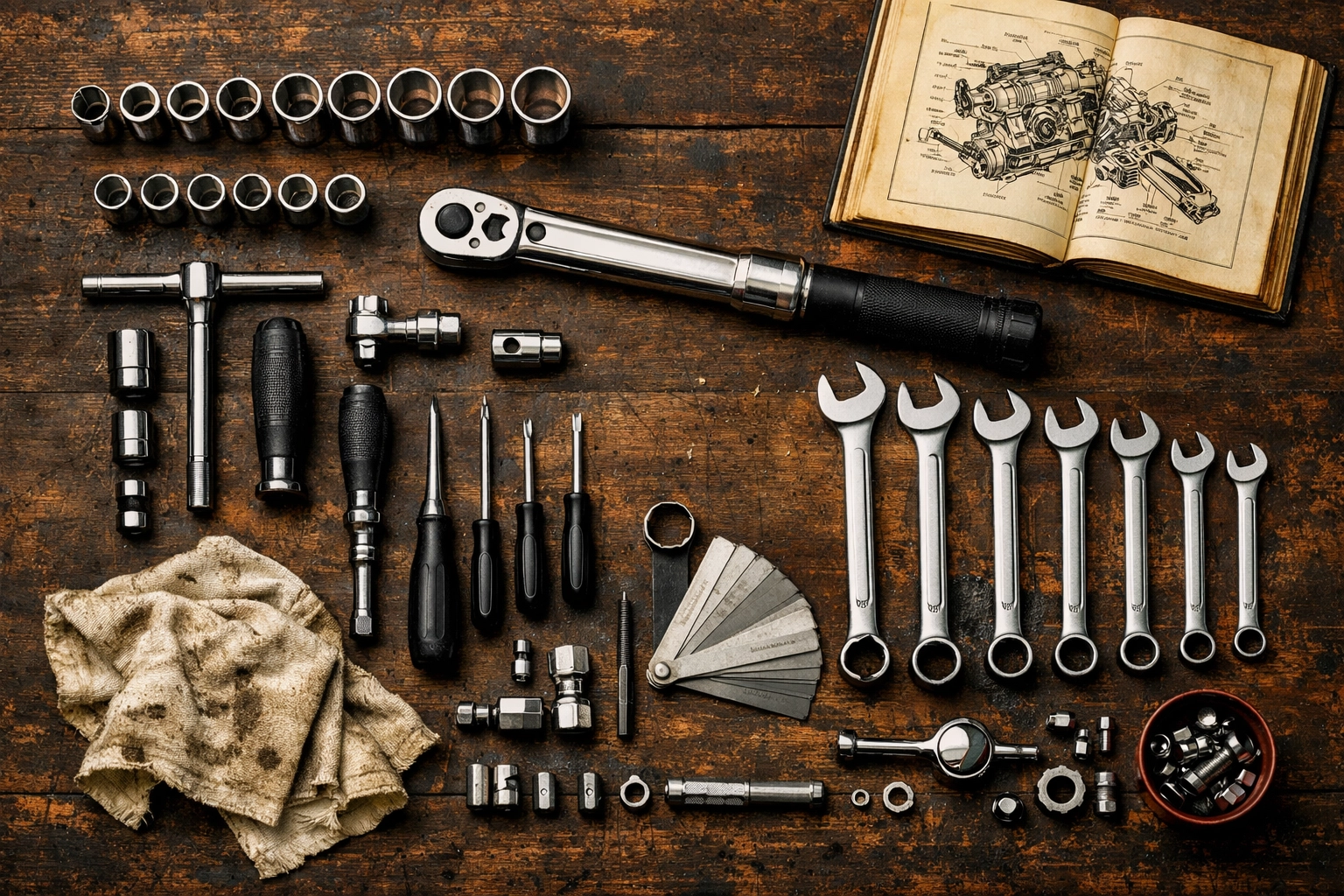
At a minimum, you'll need:
- Quality SAE and metric hand tools.
- A reliable torque wrench for precision assembly.
- High-quality jack stands (safety is non-negotiable).
- A factory service manual for your specific make and model.
However, some jobs require more than basic tools. If you're dealing with unique body lines or discontinued parts, you might need custom auto fabrication. This is where professional shops like ours really shine. We have the specialized equipment—welders, media blasters, and frame straighteners—that most home garages just don't have.
The Power of Custom Auto Fabrication
What happens when the part you need hasn't been manufactured since 1954? In the world of classic car restoration, you can't always just order what you need online. This is where custom auto fabrication becomes your best friend.
Imagine trying to restore a rare vintage truck with a rusted-out fender. If you can't find a replacement, you have to build one. Fabrication is the art of shaping metal to match the soul of the machine. It requires a steady hand, a keen eye for detail, and years of experience. At The Otto Shop, we pride ourselves on our ability to create what doesn't exist. Whether it’s custom brackets, floor pans, or specialized trim, fabrication ensures that your restoration isn't limited by what's available in a catalog.
Document Everything: The "Breadcrumb" Method
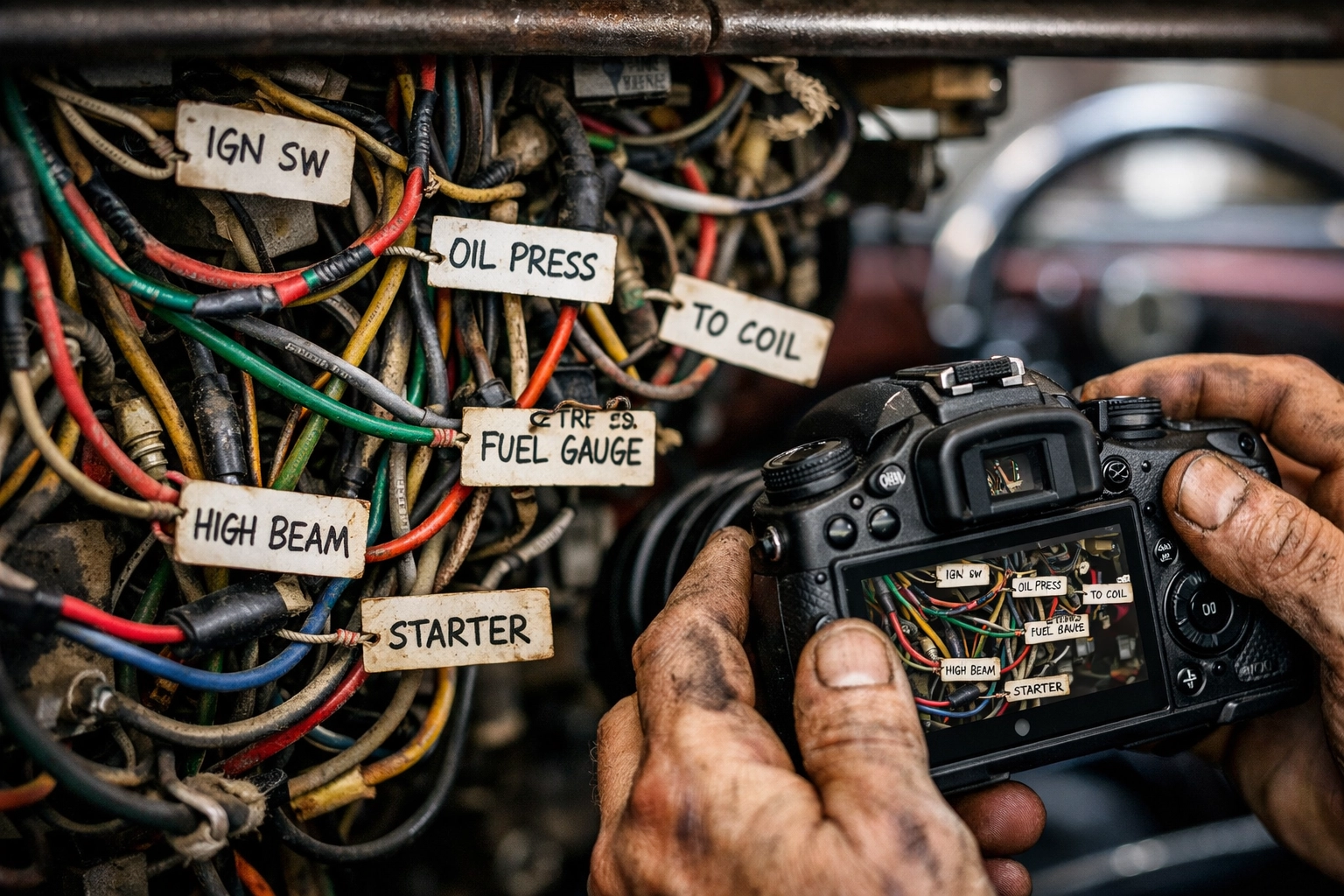
Before you turn a single bolt, grab your camera. You might think you’ll remember how those fifteen wires under the dashboard go back together, but six months from now, you won't.
Take extensive photographs of every component before and during disassembly. Label every bag of bolts. Tag every wire. This documentation is your roadmap for reassembly. There is nothing more frustrating than having a bucket of "extra" bolts at the end of a project.
Organizing your parts systematically—brakes, fuel system, electrical—will also help you stay motivated.
When you can see a finished, labeled box of parts ready for the fuel system, it feels like a win. For more tips on managing vehicle repairs and what to look for, our blog is a great resource.
Prioritizing Safety Over Aesthetics
It’s tempting to start with the "fun" stuff, like picking out a paint color or choosing new upholstery. However, a beautiful car that doesn't stop or steer is just a very expensive lawn ornament.
Always prioritize the mechanical systems first.
- Braking System: Your car must be able to stop reliably.
- Fuel and Ignition: Getting the engine running smoothly.
- Electrical: Ensuring lights and basic functions work.
- Cooling: Preventing that precious vintage engine from overheating.
Only once the car is safe and mechanically sound should you move on to cosmetic elements like auto refinishing and paint.
When to Call in the Pros
Restoring a car is a massive undertaking, and it’s okay to admit when a task is outside your comfort zone. Maybe you’re great at the mechanical work but terrified of body filler and paint. Or perhaps you’ve got the car stripped down but don't have the tools for the necessary custom auto fabrication.
Choosing a shop with a "family-owned" vibe means choosing people who care as much about your car as you do. With over 20 years of experience here in Huntington, The Otto Shop understands the local community and the unique challenges of classic car ownership in West Virginia. We offer a trustworthy hand to help you get your project across the finish line. You can learn more about our history and our team on our About Us page.
Seasonal Tips for Classic Car Owners
Living in Huntington, we deal with humidity in the summer and salt in the winter—both of which are enemies of classic steel.
- Preventative Measure: If your classic is a "fair weather" car, make sure it’s stored in a climate-controlled environment if possible.
- Winter Storage: If you're storing it for the winter, use a fuel stabilizer and keep the battery on a tender.
- Undercarriage Care: If you do take it out on a rare sunny winter day, wash the undercarriage immediately to remove any road salt.
Final Decision Framework: DIY or Pro?
To help you decide how to move forward with your restoration, ask yourself these three questions:
- Do I have the time? A restoration takes hundreds of hours. Do you have 10 hours a week to commit for the next two years?
- Do I have the tools? Will you need to spend thousands on specialized equipment you might only use once?
- What is my goal? If you want a "daily driver" quality, DIY might be the way. If you want a "show-stopper" or a high-value investment, professional expertise is often required.
Whatever you decide, the journey of restoration is incredibly rewarding. There’s nothing quite like the first time you turn the key and that engine roars to life, knowing you saved a piece of automotive history.
If you find yourself stuck or just want a professional opinion on your next steps, don't hesitate to contact us. We’re here to help you bring your legend back to life.